
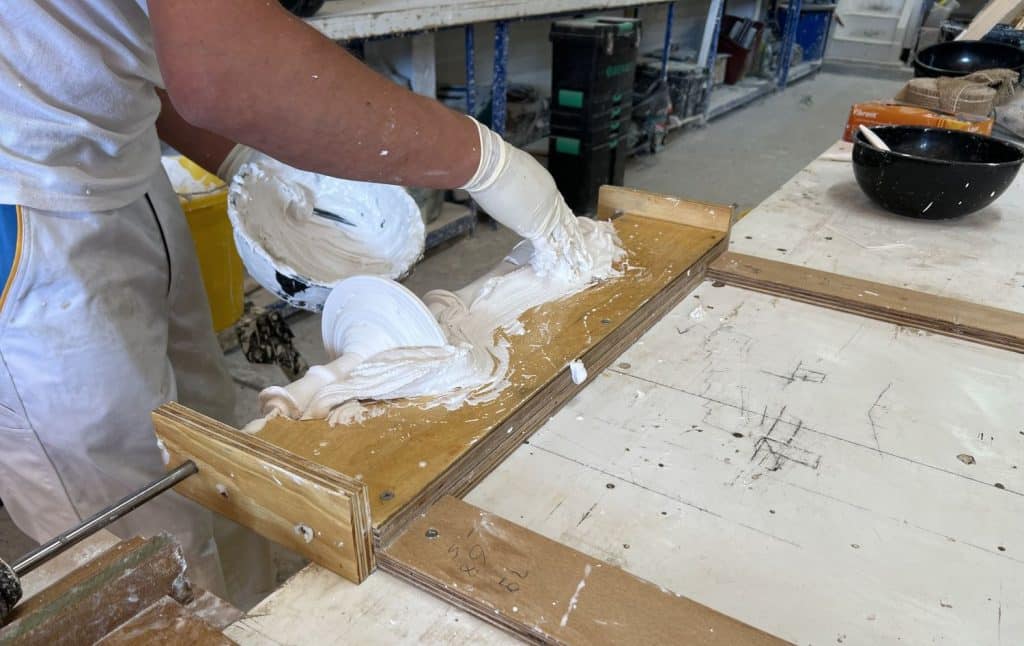
These videos show the manufacturing process for match-existing fretwork made from fibrous plaster. The first video shows the process of moulding a spindle using a rotating dowel and a profile mould fixed to the bench. At the beginning you can see an original spindle which has been halved to make the profile to cast from. As the dowel rotates hessian mixed in plaster is applied to build up the core, then just plaster to build up further against the profile until the spindle is fully formed. Twenty of these castings will be produced for the fretwork panels below.
What is fretwork?
Fretwork is a decorative design, in this case a wall feature, with a geometric pattern in relief or cut out to provide definition. Fretwork is commonly made from wood or metal, but in this case it is a collection of plaster mouldings arranged together in a form of lattice.
This fretwork is part of the restoration in the assembly hall of Hammersmith Town Hall, a Grade II listed building designed by Ernest Berry Webber in a Neo-Georgian style, first completed in 1939. We are delighted to be contributing plasterwork to the project being delivered by Ardmore to refurbish and extend the existing Town Hall building to provide more than 15,000 sqm of office and public space, alongside 204 new homes and more than 10,000 sqm of commercial space.
The second video below shows some of the moulded pieces that go together to create the match existing plaster fretwork. At the beginning, you can see an original piece of the fretwork retrieved from the building, followed by a new plaster moulding to match the existing. Bobbins were hand cast, again to match existing, before assembly of the fretwork panel begins. Ten of these sections are being produced to be fixed and arranged on site into the final wall feature.
These videos provide only a small highlight of the time and skill invested in making a single match existing fretwork moulding. To find out more about how we work, visit our bespoke plasterwork page.